

So That’s What New Life Looks Like
Rev. Erik Swanson
March 22, 2026
You can watch the entire sermon here.
As we approach the end of Lent and look ahead to Palm Sunday and Holy Week, I find myself reflecting on what this season is really meant to do in my life. I hope it has been meaningful, not as a time of self-punishment or deprivation, but as a season of preparation — a chance to step into the wilderness, strip away distractions, and rediscover what is most essential. For me, Lent is about repentance in the truest sense: turning again toward God, not out of guilt, but in order to find deeper life, deeper connection, and a renewed sense of purpose and abundance even in the midst of life’s challenges.
What Keeps Us From New Life
To move toward that new life, I have to honestly face what keeps me from it. I have to look at the systems — both personal and communal — that bind me, that keep me stuck, that create small “deaths” within me. Too often, I think of faith as an individual journey, but I am realizing more and more that it is also deeply communal. If we are to experience new life together, we must examine the systems we are part of — both the ones we actively support and the ones we passively benefit from — that keep others bound.
Larger Problems That Bind Us
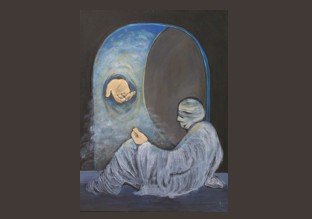
When I reflect on the story of Lazarus, I see not just an individual miracle, but a whole system surrounding death. There is grief, blame, ritual, and a community structured around loss. No wonder Jesus is deeply moved and weeps. His life and teachings are centered on bringing life and liberation, so encountering such a powerful system of death naturally disturbs him. I see echoes of that same system in our world today — in violence, injustice, and institutions that profit from confinement and inequality. These are not just isolated problems; they are part of larger systems that bind people and diminish life.
The Systems We Are Part Of
I am challenged to ask myself: what systems am I part of? Where do I see others — or even myself — wrapped in “grave clothes”? Sometimes it is in how I have been taught to see myself or others. Sometimes it is in economic systems that reward competition and oppression. Sometimes it is in societal structures that have long favored some while disadvantaging others. These systems are real, and they continue to shape our lives in profound ways.
Unbinding One Another
One image that stays with me is that Lazarus could not unbind himself. Others had wrapped him, and he needed the community to help free him. That speaks powerfully to me. The same communities and systems that bind can also become the means of liberation. I feel called to be part of that kind of community — a “beloved community” that actively works to unbind one another, to remove what restricts and suffocates life.
I am reminded, too, that liberation is mutual. I think of a mission trip where I believed I was going to help others, only to discover that I was the one being changed. In the generosity and openness of people with far less materially, I encountered a kind of freedom that challenged my assumptions and exposed my own limitations. It made me wonder who was truly bound and who was truly free.
Following The Way Of Christ
Ultimately, I recognize that we all live within interconnected systems. Some bring life, but many constrain it. The question for me is whether I am willing to see them clearly and respond. Our lives are tied together — across communities, cultures, and even nations — and our liberation is bound up with one another. My hope is to follow the way of Christ, to be moved as he was by injustice, and to join in the work of freeing others, trusting that in doing so, I too will find deeper freedom and life.