

On Board Or Outta The Way
Rev. Erik Swanson
September 20, 2026
You can watch the sermon here.
One of my favorite summer jobs was working as a fly-fishing and white-water rafting guide in Colorado. I spent my days taking people down beautiful rivers in my oar-frame boat, helping them fish and experience the river. But one trip taught me a lesson I have never forgotten.
I was rafting with a 14-year-old boy when we were caught in a huge recirculating wave. The wave sucked us in, filled the boat with water, pushed us nearly vertical, and threatened to flip us. Then it pulled us back in and did it again. I was sure we were going to lose everything. Eventually, the boat filled with so much water that we pushed through the wave and survived.
When I returned to the shop, I was shaken and scared. I asked my boss if we could talk. He told me, “You have a healthy respect for the river now. Realize that the river always wins. You can’t fight it because it will always win. We can only try to ride it the best we can.”
Fight The Current Or Ride With It?
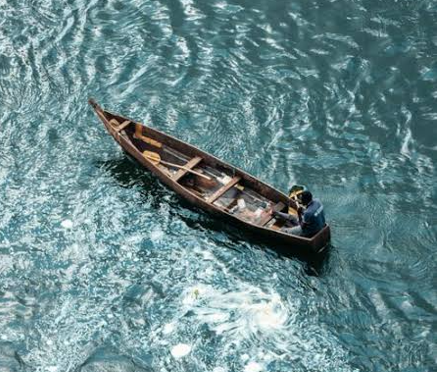
Those words have stayed with me because I think they offer a powerful metaphor for how we live and how we follow God. If God is like the river, we have a choice: we can fight the current, insisting on doing things our way, or we can learn to recognize the flow and ride with it as best we can. The challenge is discerning which is which.
I think that tension exists in all of us. We want to follow the path we know, the path that has worked for us, or the path our egos tell us to take. Sometimes we paddle so relentlessly upstream that we find ourselves struggling against God’s current. Other times, we think we are heading in the right direction only to discover that we have drifted off course and need to make a correction.
How Do We Know What The Flow Of God’s Will Actually Is?
This question is at the heart of the contemplative life. It is also incredibly important because people throughout history have claimed that their actions were God’s will when they were actually causing terrible suffering. We need to be careful about using “God’s will” as a justification for things that contradict God’s desire for humanity.
Challenging Our Ideas
The parable of the workers in the vineyard gives us an important clue. Jesus deliberately challenges our ideas about fairness, worth, work, and money. In God’s economy, things are different from the values of our culture. The parable is not simply about unfair treatment; it is about abundance, mercy, and making sure everyone has enough. The workers who waited all day experienced anxiety and uncertainty about whether they could provide for their families. God’s concern extends to them, too.
That challenges a world in which some people are considered vastly more valuable than others. When CEOs can earn hundreds of times what typical workers earn, we should ask whether our economic systems reflect God’s abundance and care or whether we are simply paddling against the current.
God’s Calling
I also believe God’s will is never for people to be hurt, fearful, killed, or imprisoned. God calls us toward a more loving, inclusive, and united way. God does not control us like a puppeteer. God calls, leads, beckons, and nudges, while we retain the freedom to choose another direction. When greed, arrogance, ego, and the desire for worldly power drive our actions, we can actively resist that sacred flow.
Waking up to this reality can be painful. Admitting where we are wrong, repenting, and changing direction is difficult. But the invitation remains: to become our best and most holy selves—not just for ourselves, but for everyone and everything.
Watch What Happens
Gamaliel’s advice offers another tool for discernment: watch what happens. If something is not of God, it may eventually fade. If it is of God, fighting it may simply mean fighting the current. Even our failures can teach us something about the flow and help us discern where to go next.
Finding The Sacred Flow
So I want to keep examining my life and asking: Where am I flowing with God, and where am I paddling upstream? Where am I resisting what God is doing? And where do I need to turn my boat and get back into the current?
When we find that sacred flow, the ride can be challenging, exhilarating, and wonderful. I strongly commend it to all of us.