

Narratives That Bind Us
Rev. Erik Swanson
April 19, 2026
I recently came across a reflection that deeply resonated with me. It draws from Audre Lorde’s powerful idea that we cannot dismantle systems of domination using the very tools that created them. If we truly want change — real justice, equity, and inclusion — then we need entirely new ways of thinking, relating, and acting. Old systems rooted in control, exclusion, and oppression cannot simply be tweaked or improved; they must be broken down so something new can emerge. That insight has stayed with me, especially as I reflect on the meaning of Easter and the story of the road to Emmaus.
Living As An “Easter Person”
Easter, for me, is not just a celebration of something that happened long ago. It’s a profound declaration that the old systems — those that led to Jesus’ death — are being replaced, not repaired. This season invites me to wrestle with what it actually means to live as an “Easter person.” If that identity doesn’t shape how I think, act, and see the world every day, then it becomes little more than a hollow label. Living into Easter means allowing transformation — letting go of old patterns, assumptions, and systems within me and around me so that new life can take root.
Disruptive or Reinforcing
I find myself challenged by this: am I really allowing the message of Easter to disrupt me? Or am I using it to reinforce what’s already comfortable and familiar? It’s easy to celebrate resurrection in theory, but much harder to let it confront the structures — both personal and societal — that need to change. I see how often faith language can be misused to justify harmful systems rather than challenge them. And I have to ask myself where I might be doing the same in subtler ways.
Recognizing New Life
At the heart of this reflection is the realization that new life is not just an abstract idea — it’s available here and now. But I wonder how often I actually notice it. Have I been trained to recognize it? The rhythms of life themselves point to resurrection every day: the ending of one day and the beginning of another, death and renewal woven into creation. Yet I often miss it, assuming life is static when, in truth, each day offers something new.
Truly Receiving New Life
Another challenge is how I respond when new life does appear. I may pray for change, for renewal, for transformation — but when it comes, I sometimes hesitate. It can feel uncomfortable, inconvenient, even overwhelming. Instead of embracing it, I might ignore it or move on too quickly. So I have to ask: how do I truly receive new life? How do I let it sink in, take root, and reshape me?
Our Own Narratives Can Blind Us
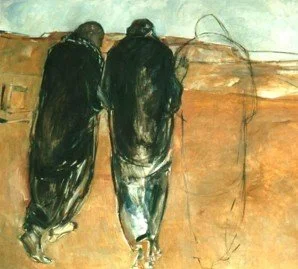
The story of Emmaus reveals something important: our own narratives can blind us. The disciples were so caught in their story of disappointment and loss that they couldn’t recognize the risen Christ walking beside them. I see myself in that. How often do my assumptions, fears, or long-held beliefs prevent me from seeing what’s right in front of me? It’s not that God is hiding — often it’s my own perspective that limits my vision.
That’s why this work feels both urgent and difficult. I have to examine the narratives that shape me — the ones I’ve inherited, the ones I cling to — and ask whether they are keeping me stuck. Real transformation requires honesty, courage, and openness to the Spirit’s work of breaking those narratives apart.
Step Into The New Life
The good news is that change is possible. Just as the disciples’ eyes were eventually opened, mine can be too. There is a different way of living — a new system grounded in love, unity, compassion, justice, and peace. This way of life challenges everything built on division, fear, and power. It calls me into something deeper, something freer.
So in this Easter season, I feel invited to pay closer attention: to the narratives I carry to the new life emerging around me, and to the ways I might resist it. And more than anything, I’m invited to step into that new life fully — to let it transform me from the inside out. Not someday, but today.